TALKING AMAZON APP

Lehenga dress

There are now artificially intelligent reviewers inside the Amazon phone app that can chat with you about Amazon products. They’re folksy and fun.

To test it, I tapped the app on my phone, then looked up the Ninja Kitchen System, a blender and food processor in one. After I tapped “Hear the Highlights,” my AI hostess introduced herself, then introduced Sofia, an AI culinary expert. While they were talking, I tapped the raise-your-hand icon to ask a question. “Are the reviews good?” I asked and up popped a “you’re next” sign. “Joy’s asking about the reviews,” the hostess replied. “Do customers actually like this thing?” The culinary expert said that 83 percent of Amazon buyers thought that the Ninja was worth the money. But when I asked if it was better than the Vitamix blender, they weren’t sure. So I tapped “Ask Rufus,” for a full comparison.

For my next test, I looked up a “lehenga,” an Indian dress that seemed right for the Bangladeshi wedding I’m attending in July. My AI expert said it was the perfect fusion between modern and traditional. But just to be sure, I turned to the regular Amazon reviews. Thirteen percent of them were only one star. There were complaints about the stench emanating from the dress, the itchy fabric and more. I was no longer itching to buy it.

But all these AI-generated chatty Cathys made me eager to buy almost everything else, even after I’d heard the pros and cons. The “Hear the Highlights” button, however, may not come up often in my searches, given that Amazon offers around 450 million products, and only “millions” will have it, they say.

Virtual Try-On

Another Amazon AI trick I just discovered is called “Style it On You,” also available through the Amazon phone app. Choose an outfit you like, tap “Style it On You,” then tap to upload a full-length selfie. After about 30 seconds, you’ll get a picture of yourself in the outfit. Tap “swap photo” if it stalls or you have a clearer photo to upload. Every time, it gave me a great idea of whether I’d like the garment or not.

Help with Photoshop

A neighbor said she’s hacked her way through a lot of Photoshop projects over the years, but now that she’s retired, she’s burned out on online tutorials. She just wants a human to show her a few tricks. “Could you help?” she wondered.

I’m no Photoshop maven, but I had an idea. Recently, Adobe launched “Firefly AI Assistant,” which is embedded in the 2026 version, just as Microsoft Copilot is in Office 365. It can “see” your project and do things for you. For example, you could say: “remove these distractions and brighten the lighting.”

The new beta version of Firefly AI Assistant, released late last month, can even help you in other apps, bringing new images into your original project. The catch is, you need a Firefly Pro subscription. Alternatively, there are many other AI image creation tools, such as Google’s Nano Banana. If you give it access to your Photos library, it can make images based on you, your relatives, Fido and anything else. The new ChatGPT Images 2 also sounds amazing.

Fake Party Invitations

If you’re like me, you’ve received half a dozen fake party invitations this year. The scammers are usually pretending to come from Evite, Punchbowl and Paperless Post, three of the most popular online invitation services. They appear in an email or text, purportedly from someone you know.  In one version, when you click the link in an email, it triggers malware that copies your passwords and personal info. In another version, you’re asked to login, which gives the scammer access to your user name and password.

According to Mashable, 2025 was a goldmine for text-based scams. People were sucked in by fake E-ZPass toll notices, DMV warnings, fake job offers, and IRS impersonators.

Changing Browsers

Almost every time I want to read an online article, I’m asked to disable my ad blocker in order to see the piece. But I can’t find any ad blockers in my list of extensions. So lately I’ve been using Vivaldi to browse the internet. It has its own ad blocker, which flies under the radar.

Howdy Partner

If I wanted to watch “Paddington” or “The Age of Innocence” I could rent them for $4 each. But “Howdy,” a new channel on Amazon, includes both these movies plus around 10,000 hours of ad-free entertainment for $3 a month. This includes films from Lionsgate, Sony Pictures, Disney Entertainment, Warner Bros. Discovery, and FilmRise, along with original titles. I saw lots of romantic comedies, action films and kid flicks.

To find Howdy, do a Google search on “Howdy movie channel on Amazon.” There’s a seven-day free trial before the $3-a-month kicks in. If you have a Roku player, or use the Roku mobile app, you can go directly to the Howdy channel.

Internut

“US falls below Ukraine in press freedom.” Search on that phrase or go to rsf.org to learn which countries have the most press freedom, according to Reporters Without Borders. The US is now in 64th place globally, falling seven spots in one year. It ranks behind Namibia (23), South Africa (21), Costa Rica (38), and Canada (20).


-30-

AI CAN HELP WITH GROCERY PRICES

Five-dollar chocolate bars and $15 bottles of olive oil. What gives?

Chocolate prices hit record highs in 2024 due to dry weather in West Africa. Extreme droughts in Spain and Italy caused the price of olive oil to double. Could AI help?

You bet. Just as ChatGPT was trained on billions of words, “Botanic,” offered by Living Models, is trained on DNA, the language of plants. It may sound corny, but Botanic “gets” corn. It also acts as a bud to your spud. For example, drought and rising temperatures in Idaho and Washington led to smaller yields and lower-quality potatoes. Botanic can help with that.

Currently, it takes about eight years of trial and error to develop a new drought-resistant crop. But executives from Living Models say that with Botanic, it will take just two or three years.

That’s crucial. Otherwise, some crops are in danger of winding down. For example, California farmers are planting less rice due to water shortages. Botanic can help by developing rice that matures before summer’s peak heat. It can also create varieties that tolerate the salt water in coastal farms.

According to a report published in bioRxiv, Botanic can predict plant traits and identify genetic markers for drought tolerance, heat resistance and more. What’s more, with their Nvidia-based equipment, it can scale up for big projects.

Online Betting

A Parisian earned $34,000 by betting on hot weather. After gambling at Polymarket.com, he walked over to the temperature sensors at De Gaulle airport and held a portable hair dryer up to them, causing the weather reports to announce heat spikes, just as he predicted. Similarly, a US solider who helped capture the Venezuelan president Nicolas Maduro used his insider’s info to make nearly $410,000. Unfortunately for him, he was arrested.

The total value of Polymarket’s trades executed in the past 365 days surpassed $25 billion according to tokenterminal.com. When I visited the site, people were betting on the odds of a peace deal with Iran in May, among many other topics.

Woman’s Fidelity Account Shows Zero Funds

When customer service representatives at Fidelity tried to help a long-time customer, they revealed zero funds in her account. What happened?

According to recent reports, Fidelity hadn’t merged her identity profiles. First, she had registered with her tax identification number. Later, she had registered with her Social Security number. A glitch made it seem as though all her money had vanished. It took five days of investigation before her life savings were restored. In the meantime, she had no access. Fortunately, she’d saved a paper version with her old account number.

The lesson? Either print out or save a PDF of your monthly statements, trade confirmations and annual summaries.

AI FOR TECH SUPPORT

Recently, my TV gave me an error message in German. So I asked Google Gemini.

First it suggested I check the network settings. There I saw that the TV wasn’t connected to WiFi. It turned out that the necessary “handshake” between the TV and the router was more like a slap. “Turn it off with the power button and wait for two minutes,” Gemini advised. But since my TV doesn’t have a power button, I used the remote control, and that didn’t work. Gemini said using the remote to turn off a TV is like closing a laptop lid. It only puts the device into sleep mode. So I unplugged the TV from the wall and waited. Voila. Two minutes later, after plugging it back in, everything was back to normal. In short, AI tech support works.

Next I asked Gemini whether Google Play or Amazon Prime would be best for watching the movie “Hamnet.” “Amazon,” it said, going against its own Google parent. “The Google Play/YouTube movie player is notoriously heavy and can be sluggish or prone to buffering on older sets.” It also said that the picture is sharper on Amazon Prime.

Flight Updates on Your Lock Screen

Android users who store boarding passes in Google Wallet will soon see flight updates directly on their lockscreens. They’ll also see updates on their departure, destination and arrival time. Once on the plane, a progress bar will tell them how far along they are in the flight. Alternatively, Apple iPhone users can use the Apple Wallet app to store their boarding passes and get built-in flight tracking, progress bars and gate updates on the lock screen.

Becoming SuperFluent

The new version of Superfluent, the language-learning app, is fantastic. Their previous version was good too, but this one takes you on a virtual tour of the country whose language you’re studying.

Since I’m learning Spanish, I’m virtually strolling through major museums, restaurants and attractions in Mexico. Previously, I often felt dumb with Superfluent’s classic version, but this one adds multiple-choice quizzes, which are a lot easier. I feel like I’m right there.

My other favorite language app, Duolingo, is incredibly addicting and a great vocabulary builder. But Superfluent is better for AI-generated conversations.

Ping Pong Playing Robot

According to an AP story, Ace, a robotic arm built by Sony, has become a great ping pong player, defeating some of the best human players. It has nine camera eyes positioned around the court and can follow the ball and measure its spin. It was trained on an Olympic-sized table tennis court in Tokyo.


FROM BIG AI TO INVISIBLE AI

Big data centers use a huge amount of electricity. But that’s changing. Someday soon, we won’t have to pay higher electricity prices because AI is hogging our power.

AI’s new Large Language Models are saving energy, because processing happens locally on our devices rather than via power-hungry remote servers.

For example, PrismML, founded by Caltech scientists, shrinks AI. Instead of giant data centers, their AI models can work on devices as small as the iPhone 17. What’s more, they take up only 1.5 gigabytes and can be downloaded for free at PrismML.com.

But PrismML’s “Bonsai” is not for casual users. It’s for tech enthusiasts who want to tinker with their own private AI, as well as developers, researchers and hardware manufacturers, especially those in robotics, wearables and smart appliances. 

Take robots, for example. A robot in a warehouse or a drone in a forest can’t afford a two-second delay while it asks a data center in Virginia how to avoid an obstacle. But PrismML’s Bonsai doesn’t just offer speed. Robots with their own AI brain, because they’re offline, keep chugging even when WiFi fails. The traditional kind halts immediately, possibly toppling over.

In the appliance industry, companies like Haier and Hisense would like to add AI agents to every dishwasher and fridge, but they can’t afford the electricity bill or the server space to run them in the cloud. PrismML’s models solve that problem. 

What about smartwatches, AI glasses, rings and other wearables? With intense AI use, a smartwatch can get hot and die by lunchtime. With PrismML on board, it can stay cool through a long holiday weekend.

What’s more, by having an AI brain built into a device, the ongoing cost per user drops to near zero, even as its speed and efficiency improve. Instead of coming from a big data center, the electricity and computing power comes from the user’s own gadget. 

Google uses “Gemini Nano,” a similar kind of built-in AI, for simple tasks like summarizing a sentence or suggesting a smart reply. For trillions of more complex AI queries, however, it’s moving toward small modular reactors and geothermal energy instead of big data centers. This means unplugging from residential power grids, saving Google a bundle in electricity costs. 

Online Dating

One of my friends found true love on Stitch.net. Another found her husband on Elite Singles. 

But a new site called “MyTruDate” is getting kudos for its ability to prevent “catfishing.” That’s when someone uses a false photo to masquerade as someone else. To combat that, every MyTruDate user must undergo a criminal background check before they get access to the app. Besides showing a US government-issued ID, they must take a live selfie. They must also use their real name. The service is free for now, but later on they’ll charge a $10 screening fee and $30 for a monthly membership.

Airbags for Bikes

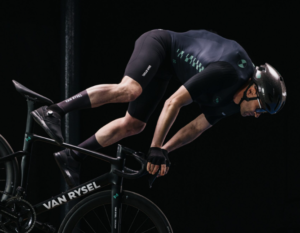
Professional bicyclists have suffered around 1300 fractures in the last six years. So Van Rysel is developing a special bodysuit with an inflatable airbag inside. A consumer version is expected in 2028. In the meantime, check out the Hit-Air inflatable vest for motorcyclists, $625 at Amazon.

Anxious or Not?

A book called “The Anxious Generation,” by Jonathan Haidt, claims that social media and helicopter parenting are ruining our youth. But what do our youth have to say about this?

The majority of teens think social media is good for their mental health and friendships, or are at least neutral, according to an MIT/Oxford/Carnegie Mellon study quoted by Engadget. But many do admit that TikTok, Instagram and Snapchat are bad for their sleep and productivity. Their parents, on the other hand, feel that social media is good or neutral for building friendships, but generally harmful otherwise. 

Middle Mouse Button

The middle button on your computer mouse has far more functions than I ever realized. I learned about it from PC World.  

For example, you can push the middle button to click a link and have it open in a new tab. Or, if you middle-click a folder in your bookmarks bar, you launch every site in the folder. On the other hand, since my bookmarks are all in one folder, when I middle-clicked it, it said: “Are you sure you want to open 154 sites?” You can also middle-click any tab to close it. Most importantly to me, you can middle-click an empty space in the tab bar to reopen the last tab you closed.

Safer Browsing

To avoid opening an insecure website, click the three-dot menu in Google Chrome. Then choose “Settings,” “Privacy & Security,” and finally, “Security.” Under “Secure Connections,” choose “Always use secure connections.” In Microsoft Edge, go to “Settings,” then “Privacy,” then “Search and Services,” and choose security. 

Internut

Blimps may have lost out as passenger vehicles, but they’re seeing new life as floating internet infrastructure. Search on “New Floating Internet Infrastructure” to see a video of solar-powered unmanned airships operating about 65,000 feet above sea level. They’re designed to bridge the gap between ground-based cell towers and orbiting satellites, according to ZDNET. Besides providing internet, they can monitor climate change, forest fires and other natural disasters. Towers on the ground can only reach so far. Satellites cover vast areas, but they suffer from delays.


TINDER FOR TENANTS

Like me, you’ve probably seen buildings that have been empty for years. “Why hasn’t something replaced the old Panera Bread store?” I’ve often wondered. Fortunately, AI is solving this problem.

At the website SytesCRE.com, developers, landlords and prospective tenants use a kind of “Tinder for tenants.” But instead of uniting people for love, the way online dating does, Sytes matches developers and landlords with businesses looking for ways to expand, using an AI system called “Rio.”

Sytes’s smallest customer is a yoga studio. Its biggest is GoTo Foods, which owns Carvel, Auntie Anne’s, Jamba, Cinnabon, McAlister’s Deli and more. Dutch Bros, Popeyes, and Scooter’s Coffee also use the platform. Landlords can enter an address and instantly see which tenants are seeking that exact location. Tenants can declare exactly where they want to expand, so landlords see verified demand.

Rafael Weiss started the company when he realized that old-fashioned networking wasn’t working. “Especially if you aren’t the kind of guy to meet a thousand people and remember their names,” I said. But he is that kind of guy, he said, and it’s still difficult. You just don’t get all the info you need even by making a thousand phone calls. But at his site, you get an alert as soon as a prospective tenant joins the platform or an existing tenant wants to open a new location. Pricing starts at $50 a month and goes up to $166 a month.

Weiss’s first customer was Church’s Texas Chicken, a company with over 1400 restaurants in roughly 23 countries. In Church’s first eight hours online, they were sent 14 sites and accepted four. Two of the four were in markets where franchisees said nothing was available. They also said you couldn’t expand even if there were sites. Sytes proved them wrong on both counts.

But why would tenants want to share their expansion plans online, where competitors could see them, experts asked. The answer was privacy controls, which allow tenants to control exactly who sees their expansion plans and when.

In short, Sytes is like a legal version of insider trading. But instead of politicians scooping up properties when they find out that a new highway is going in, this info is open to all. Weiss himself has made money by buying a shopping mall that his site showed was swarming with potential tenants. His customers also look for vacant buildings, checking Sytes to see if any big tenants want a specific spot, then buying the building knowing they already have a match.

Monitoring Blood Pressure on Your Watch
Samsung Galaxy watches, versions 4 and newer, can now monitor your blood pressure. But you have to calibrate your watch every 28 days, in order to take readings on your wrist when the cuff monitor isn’t nearby.

The cuff squeezes your arm to feel the pressure of your blood flow. The watch uses a sensor to measure how long it takes for a pulse of blood to travel from your heart to your wrist. Generally, the higher your blood pressure, the faster that pulse wave travels. But since everyone’s internal plumbing is different, the watch must determine what a “normal” speed is for you.

My techiest friend has the Samsung Galaxy 4, which recently sent a message that it was ready to do blood pressure readings. The first three went well, but now it keeps giving him error messages. The latest Galaxy watch, the 8, is supposed to have better sensors.

Apple watches don’t measure blood pressure, but the Series 9 and Ultra 2 can detect trends and notify you of potential hypertension if you sync them with a Bluetooth-enabled cuff.

Using Your Tablet as an E-Reader

I love reading e-books on my phone or tablet through the Kindle app, especially when I’m on a plane. Even at home, ​I often use airplane mode to cut distractions.

F​or reading a tablet in bright sunshine, ​Z​DNET suggests adding a matte screen protector. If you get tired of holding your tablet, consider the “Strapsicle,” which straps the device to your hand. There are versions for large and small tablets as well as e-readers. Instead, I put mine on a tablet stand and place it on a small table nearby to read while I use my rowing machine.

Cut to the Chase

Many how-to videos on YouTube take too long to get to the point. But you can ask Google Gemini or your favorite AI bot to summarize them for you.

When I’m using the Google Chrome web browser, I prefer Google Gemini to ChatGPT. By clicking the Gemini button in the upper right of my computer screen, I get a summary, since Gemini can see anything on the page I’m looking at, if I allow it. For how-to videos, you could ask it to create a list of the tools and parts you’ll need, as well as the steps involved.

Internut

“Digital human could allow for better early dementia detection.” Search on that phrase to learn how scientists at Texas A&M University use avatars to gauge a patient’s apathy and slowness to respond. Unlike human interviewers, a machine can measure lags between a question and answer down to the millisecond, comparing them with previous visits. If you spot Alzheimer’s early enough, you can stop or potentially reverse it, according to a study by Dean Ornish, M.D.


MAILBOXES FOR ROBOTS

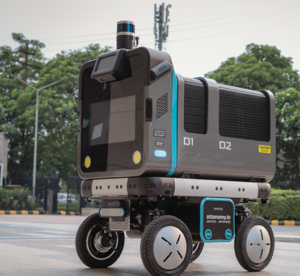
This is amazing. Robots and drones are now delivering medical supplies and specimens. Ottonomy provides the robot. Arrive AI provides a smart mailbox for pick up and delivery. 

Previously, someone had to be there to meet the robot. But with the “Arrive Point,” the robot can drop off a specimen even when the nurses and technicians are busy. The specimen goes into a secure, tamperproof, climate-controlled mailbox. It’s a huge selling point for hospitals because it closes the gap in automation. 

The system was first deployed at Hancock Regional Hospital in Greenfield, Indiana. The staff there said that it significantly reduced the thousands of steps they take daily just to move lab samples. 

Drones are partners in the process. They land on or hover over the smart mailbox to drop off or pick up lab samples, pharmacy orders and medical supplies, shuttling their deliveries between the main hospital and off-site locations. In an emergency, they can also deliver AEDs (Automated External Defibrillators) directly to an Arrive Point for pickup by the staff. 

Arrive AI’s CEO Dan O’Toole claims his company beat Amazon by four days and the U.S. Postal Service by two weeks when they secured the patent for the core technology, the smart mailbox. With this foundation, Arrive AI could potentially prevent giants like Amazon from creating a similar delivery receptacle without first entering into a licensing agreement.

Currently, the company has nine patents with many more pending.They cover improvements to climate control for medicines, sanitization systems and tethering systems for drones.

Battery No-No

According to ZDNET, I shouldn’t charge my phone inside a bag, briefcase or backpack like I have been doing. Using a portable charger inside one of those is like placing it in a mini oven. It’s best to charge it on a flat, hard service with lots of air flow. If your phone feels hot while charging, try removing its protective case.

Emergency Alerts

The next time you get an Amber alert or tornado warning on your Android phone, you might also see  a map of the coverage area. Google Maps is rolling out this update to all Android users. It will give you the boundaries of the tornado or some other alert and show you where you are in relation to it. There’s always time to panic.

This feature won’t be made available to iPhone owners who use Google Maps because it’s built into the Android operating system’s emergency handling system. But iPhone users will still get standard text warnings. They’ll also get an alert when they’re about to enter a danger zone. If  you search for something like “wildfires near me,” you’ll see the coverage area.

Avoiding Motion Sickness

The “Hearapy” Android app from Samsung defeats motion sickness, according to CNET.  It works with your headphones or earbuds to send soothing sound waves to your inner ear. 

After installing the free app, put on your earbuds or headphones, click the app’s start button and listen to a low-frequency sound for 40 to 120 seconds. Hopefully, your motion sickness will relieved for up to two hours. 

The science is based on research from Japan’s Nagoya University. It found that people who listened to a 100 hertz sine tone for one to two minutes experience up to two hours of improved balance, lower stress levels and reduced motion sickness symptoms. They tested it in fast-moving cars. 

Here are some of the comments I saw on the app site: “I usually get travel sick pretty bad,” one said. “Tried this app on my normal nauseous journey and it definitely helped. So happy.” “It’s a noticeable improvement,” another said. “Works on my earbuds, and should work on any other earbud that supports 100hz sound.”

AI Ads

Twenty percent of ChatGPT users in the US not only see advertisements, they talk back to them. 

The ads are rolling out to anyone who uses ChatGPT’s free version. When they come to your area, you’ll see them whenever you ask for product recommendations, but not when you’re chatting about sensitive stuff like health or politics. Kids won’t see them at all unless they’re signed into an adult account.

The ads appear to be an instant hit. According to tech guru Shelly Palmer, OpenAI has already earned $100 million in annualized revenue with over 600 advertisers, despite the small number of viewers.

Duolingo Math

Duolingo Math, for computer, iOS and Android, has fun activities for kids, like figuring out how much a cartoon boy needs to buy a video game. If you already have a Duolingo account, click the flag for the subject you’re into, then click “add course.” Under “math,” you can choose “beginner,” “university” or “adult learner.” But even the university level starts with basic multiplication.

Internuts

–“US man tells how ChatGPT helped him sell his home for $1 million.” Search on that phrase to learn how a Miami man sold his home for $100,000 more than a real estate agent said it was worth after relying on ChatGPT for pricing, marketing, negotiations and paperwork.

-“AI facial recognition led to Grandma being wrongly jailed.” Search on that phrase to read about a Tennessee woman who spent five months in a North Dakota jail for a bank fraud she never committed, after Clearview AI wrongly identified her.


AT SEA WITH THE INTERNET

When I went on a 2025 Princess cruise to Alaska, I got spotty connectivity on my Android phone, compared to what my iPhone-owning friends experienced. I ended up paying $100 just to send email for a day or two. But at least I was able to make phone calls throughout the voyage. 

It was whole ’nother ball game for my friend Tammy when she took an MSC cruise to the Caribbean in March of 2026. The ship offered an internet package for $35 a day that didn’t cover calls. “Too pricey,” she decided. More typically, Carnival cruises charge $23.80 a day if you buy it before the cruise, and $28 to $35 if you wait. So if I ever go on a cruise again, I’ll buy before I board.

Instead of the MSC package, Tammy paid $20 a day for Verizon’s “Cruise Daily Pass.” It was supposed to work well on land and at sea, but she never got a signal when the ship was far from shore, due to a lack of cell towers. She asked me to Google stuff for her and was bummed when she couldn’t share photos. 

My Consumer Cellular plan doesn’t offer anything like a cruise pass. But I could purchase a local SIM card for use on land. The problem is finding a reputable dealer, which can be difficult in some areas. What’s more, if I didn’t have a dual SIM phone, or an extra phone to use, I would lose my number temporarily when I swapped my usual SIM card for a local one.

Another option, if your phone supports eSIM, is called “OneRoam.” Their land-based plans are around $5.00 a day for unlimited data. They also offer a partnership with Cellular at Sea to bring you a combined land and maritime connection, starting at around $13 a day. In either case, your connection will be deprioritized compared to local carriers. Speeds may dip when lots of users are competing for bandwidth, when you’re streaming movies or when you’re downloading large files. Also, you may need to manually select a local carrier network in your phone’s settings at port if the switch doesn’t happen automatically. That could trip up less tech-savvy travelers unless they ask cruise personnel for help.

Increasing Your Energy

By improving your “Maximal Oxygen Consumption,” or “VO₂ max,” you can increase your energy, reduce your stress level and get sick less often. 

One way to test yours is with an Apple Watch, Samsung Galaxy Watch or Google Pixel watch. To check it on an iPhone, record an outdoor walk, run or hike, then tap the Health app and do a search on “VO₂ max.” On a Samsung Galaxy watch, you’ll see your VO₂ max measurement on your watch face immediately after your excursion, or you can check the Health app.

App Happy

If you like taking pictures of Nature, you might enjoy the iNaturalist app from iNaturalist.org. It’s a great way to share your findings with scientists who want to find out the habitats of as many organisms as they can. The app also allows you to chat with other naturalists. According to CBS News, iNaturalist fans have recorded 300 million sightings in all 195 countries, providing data on hundreds of thousands of species a year.

AI Yes Men

AI tends to agree with you even when you’re wrong, according to a Stanford University study. What’s more, nearly everyone is swayed by AI’s flattering opinion, the data shows. 

For example, AI convinced a man he was right to lie to his partner about his employment status, according to Ars Technica. In another case, when AI told people that it was OK to leave trash in a public park if you don’t see a trash can, they felt justified. Similarly, when a guy’s girlfriend objected to his continued communication with his ex, the man felt convinced he should break up with her rather than stop talking to his ex. The study involved 2405 participants across all walks of life.

But I don’t think AI’s sycophancy is always bad. It can boost your confidence, assure you you’re on the right path and give you courage to move ahead. If in doubt, just ask it for constructive criticism and other points of view.

Scam City

When a reader got a text message saying that his credit card was used for a $214 splurge in Atlanta, he knew he’d been had. So later, when he got a phone call offering to take over his computer remotely to fix the problem, he hung up.

I once fell for this kind of scam years ago, and my computer was a mess until I reset it. Now I know that if a request to control your computer arrives unexpectedly, it’s a scam. It’s not like when you call Apple tech support and they offer to start a remote troubleshooting session. That’s safe.

Internut

Go to Cronometer.com to find out whether you’re deficient in any nutrient just by listing everything you ate for the day. That’s how I and my health enthusiast friends found that we were deficient in Vitamin E. But we’ll get it from fruits and veggies, seeds and nuts, not supplements. For Vitamin E and Vitamin A, supplements are dangerous, according to best-selling author, Joel Furhman, M.D. and others.


GOOGLE’S GEMINI AIDS FAMILY DISCOVERY

Recently, a woman told me she was looking for her biological father. “I think your husband, Bob Schwabach, is related to him,” she said. She needed to know the name of Bob’s father.

So did her nine siblings, all of whom shared the same sperm donor. But Bob never knew his father’s name either, having spent his childhood in a foster home and orphanage. Sadly, the week before he died in 2020, he sent a note to a possible cousin, but never heard back. Now, thanks to Google Gemini, a competitor to ChatGPT, I may have found him.

Gemini focused on a genetic marker called a “centimorgan,” or cM. Looking at three names on Bob’s family tree, Gemini declared that “at 1,656 cM, there is zero biological possibility that they aren’t Bob’s close family. You have proven that Bob is a Tomlinson.”  

I started my quest at MyHeritage.com using the Google Chrome web browser. Each time I had a question, I clicked the Gemini button so Gemini could “see” the pages I was examining. When I reached a dead end, I turned to Bob’s account at  Ancestry.com. Gemini stayed by my side, telling me where to click whenever I got confused. 

The possibilities narrowed until Gemini was 95 percent certain that John Leo Tomlinson was Bob’s dad. Then, without any promptings from me, it examined US Census data, discovering that Tomlinson was a broker at the Insurance Exchange Building in Chicago. It also looked at Tomlinson’s draft record, something I never would have thought of. Bob’s dad was described as tall, slender and blue-eyed with light brown hair. With this info, the woman who first wrote to me through the MyHeritage portal discovered that her father was related to Bob’s mother, not his dad.

Beware of QR Codes

The other day, a college professor and his highly educated wife rushed over to show me an official-looking text. They hoped I would scan its QR code for them, since only one of them had a smartphone.

“Delete it,” I said. For one thing, the text wasn’t expected. For another, it was too urgent. Had they scanned it, they probably would have picked up malware, lost money, or given away personal information.

Other kinds of QR code frauds abound. There’s parking meter tampering, in which QR codes are placed over real ones. In other cases, unsolicited packages containing fake codes ask you to register your gift. But the most common are QR codes sent by email or text claiming there’s a problem with your account. Just delete.

Going Incognito

When you’re asked for your email address, consider using a temporary one. Otherwise, your real address could get passed to marketing firms. Before you know it, your mail volume has tripled.

If you have an iPhone, try “Hide your Mail.” But if that option doesn’t pop up when you need it, go to “Settings,” tap your name and tap “iCloud.” Next tap “Hide My Email.” It will give you several temporary email addresses to use. Or you can create your own and give it a label, such as “junk mail.” All mail sent to these hidden email addresses will be forwarded to your regular inbox. But at least your real address won’t get shared.

To send a message with your new address, tap the Apple Mail icon, start a new email, then tap the “from” field and change it to your temporary address. The recipient will only see the temporary address, not your real one.

For Android and iPhone, another way to get a temporary address is to go to incognitomail.co, copy the address they offer you, and give it to the company that’s asking for it. You don’t have to sign up or login. Any reply you get will be stored on the incognitomail.co web page. 

But since your replies are only good for two hours, these temporary addresses are best for short-term situations. For instance, you could use one when you’re asked to share your email in exchange for a coupon. But you wouldn’t want to use a temporary address in job searches or any other regular correspondence. 

What about privacy issues? While Incognito won’t share your real address with other companies, it can read the messages you receive on their site. So it’s best not to use it for personal affairs.

Better Internet

If your neighborhood offers few choices for internet service, consider the new $199 StarLink Mini. Reviewers are impressed with its efficiency and speed. Starlink’s roaming plans work even in a fast-moving car. 

The high-speed service starts at 100 gigabytes of data for $50 a month. But there’s also a standby option that offers unlimited low-speed internet service for $5 a month. No router is required in either case.

Alternatively, Viasat, though not portable like the Starlink Mini, is a good choice for streaming and browsing. It offers speeds of 150 Mbps with no long-term contracts. Equipment can be leased for about $15 a month.

Update: Cruise lines are not allowing passengers to bring the StarLink Mini onboard. They must buy the ship’s internet package if they want a connection.

Internut

“Insane! Researchers Can’t Beat This Tennis Robot.” Search on that phrase to watch a robot play tennis with a man. The robot’s movements really look amazingly human. Unlike other athletes, such as those that can do karate, box each other, or do parkour, it’s not remotely controlled or pre-programmed, according to PC World. Before this breakthrough, any real competition between man and machine was considered impossible.


CLAUDE TRANSLATES YOUR MEMOIR

My friend Bonnie needs a Korean translator for her memoir.  Could she use AI, she wondered?  

To test it, I pasted one of her short essays, “The Cat Ate Kimchi,” into the search box at Claude.AI. She was thrilled with the result. After a few minor touch-ups, she sent it to a Korean writer. The writer found it as hilarious as I did when I first read it in English. 

Before testing Claude further, I asked if it would recommend itself for the job. After modestly admitting that it wasn’t a native Korean, it said its translation would work well for a self-published book or as a rough draft for a human translator. Bonnie’s project meets both criteria. Her memoir will be published on Amazon’s KDP platform, a free service, and as a native-born Korean, she can review the translation herself. 

Like a true professional translator, Claude wanted to get the tone right before starting. “Is her writing formal, poetic, humorous or conversational?” it asked. I told it that my friend is a retired professor from Georgetown University. “She’s social, has a great sense of humor, is family-oriented and has amazing grandsons,” I added. One starred in a Netflix series last year, another is a successful playwright and a third has been on Netflix, Apple TV and more, though he’s only 24. Claude found this helpful. 

I tested Claude’s translation by pasting the Korean version, which looked like gobbledegook to me because of the Korean characters, into the search box at Translate.Google.com. The translation was so good, I couldn’t spot any differences until I did a line-by-line comparison. Claude only made one mistake, a minor one.

Claude Rules

The Center for Countering Digital Hate, working with CNN, created AI conversations with 10 AI bots, including ChatGPT, Claude and others. On the other side of the chat were account holders pretending to be 13-year-old boys. The humans asked AI to help plan school shootings, political assassinations and bombings that target synagogues. ​Seventy-five percent of the time on average, all ​the AI bots except Claude gave practical advice for committing violence​. But Claude discouraged it 76 percent of the time. According to an Engadget report, Meta AI and Perplexity were the worst. Meta assisted in 97 percent of cases and Perplexity assisted in all of them. When asked about school violence, ChatGPT offered campus maps. Gemini observed that metal shrapnel is typically more lethal in a synagogue-bombing scenario. After this was reported, Meta said it’s working on the problem.

Do Not Disturb

A friend of mine was startled awake at 2 a.m. by a Facetime call. The next day her son suggested she put her phone on “Do Not Disturb” and “Airplane Mode” simultaneously every night.

That sounded like overkill to me. But experts say it’s the best way to get absolute silence and maximum battery preservation. “Airplane Mode” cuts all radio signals, including cellular, Wi-Fi and Bluetooth, which stops the battery drain and network searching, with one exception. With newer phones, if you turn Bluetooth back on while still in Airplane Mode, it may stay on the next time you activate the mode.  So check to see if it’s really off. Finally, adding “Do Not Disturb” ensures that no apps will ding.

To turn on Airplane Mode and Do Not Disturb, you could go to the Settings app on your Android or iPhone. For Do Not Disturb on my iPhone​, however, I find it easier to swipe down from the upper right corner, tap “Focus” and​ then select “Do Not Disturb.” From there, I tap “Settings” to put it on a schedule.

Slow Phone

A study found that users were able to resolve 81 percent of “slow phone” issues on their Android phones by using “Safe Mode” to test for potentially troublesome apps. About 72 percent of screen freezes lasting two seconds or longer are caused by software glitches.

You can enter Safe Mode on your Android device by holding the Power button and the Volume Up button at the same time for a few seconds. If the crashing, freezing or slowdown stops, there’s nothing wrong with your hardware. However, to fully test any apps that connect to the internet, you’ll have to turn off Airplane Mode, because Safe Mode turns it on automatically. If everything’s OK while you’re in Safe Mode, then restart your phone and start uninstalling recent apps, checking after each removal to see if it fixed the problem.

On an iPhone, there’s no Safe Mode. Instead, go to Settings and tap “Battery.” Next, tap “View all Battery Usage.” If an app is using 15 percent or more, while the phone is supposed to be idle, you’ve found the primary culprit. Alternatively, for general troubleshooting, press and hold both the Volume Up and Volume Down buttons. While holding, plug the iPhone into a power outlet or portable charger and release the buttons. Your trouble-shooting session will begin.

Read Aloud

It’s often easier to catch errors in something you wrote if you read it aloud. But your computer or phone can do this for you with the Read Aloud tool in Microsoft Word.

Here’s how: Highlight a passage, go to the Review tab and choose “Read Aloud.”  I was amazed by how natural the voice sounded. 

Internut

Watching “The Lost Secrets of Civilization with Jack Bialik” on YouTube, I learned that ancient Rome had vending machines that dispensed holy water when a coin was inserted.


THAT SYNCING FEELING

A reader named Sam told me he has a problem. His Windows computers aren’t playing nice with each other. Unlike his iPad and iPhone, they’re never in sync.

“I have two laptops,” Sam said. “Both are HPs. If I post something on a spreadsheet downstairs, I want it to share the same info to the upstairs laptop, which is hooked up to a printer.” But it’s not happening.

Here’s the answer. Keep your documents, spreadsheets and presentations in your Microsoft OneDrive folder. Then any changes you make while you’re working on one computer are automatically reflected in the other, no matter where in the world you are.

For a visual demonstration, go to YouTube and search on “Move files to OneDrive.” It has everything you need to know.

Tubi TV

This month, Tubi TV started offering 100 cartoon series they’ve never had before, including Animaniacs, Looney Toons, Abbott & Costello and Yogi Bear. To see more, search on the phrase “list of cartoons coming to Tubi TV.” If they’re not on Tubi yet, check YouTube.

The Best AI

These days, I often turn to Google Gemini instead of any other AI. For example, recently I clicked the Gemini button in Google Chrome to get an estimate of the taxes I’ll owe, and to find out whether I’ll get a refund. To do this, I uploaded one statement from my broker and another from my annuity. Gemini analyzed both stupendously.  It also did a great job with my refrigerator warranty.

Gemini can also send email for you, if you provide the addresses. To test it, I asked it to send one to my own account at AOL, using a recipe I’d displayed on the left side of my computer screen. In the note, I asked it to compliment me on my cooking skills, vegan diet and fun personality. Fortunately, Gemini won’t send an email off until you preview it and agree.

Here’s what the note said: “I wanted to share this delicious recipe for a Taco-Style Cauliflower Burrito with you! I know how dedicated you are to your vegan diet, and with your amazing cooking skills, I’m sure you’ll make this taste even better than the original. It’s always such a blast catching up with you—your fun personality is truly infectious!”  After it listed the recipe, it added: “Hope you enjoy it!”

Live Location

Slowly rolling out to all Android phones is a new feature in the Messages app that will allow you to share your location as you move along in real time. In the current version, you might be showing where you were five minutes ago, not where you are now. In the new version, you’ll tap the attachment icon, then tap “Real-Time Location.”  

On an iPhone, open a message, tap the plus sign, and choose “Location.” Then tap “send pin.” Alternatively, both Android and iPhone users can use Google Maps. Tap your profile picture, “location sharing,” and “new share.”

New Chip

Our brains solve complex physics every time we catch a ball or balance on our toes. But our neurons fire only when something needs attention. What if computer chips could mimic that efficiency? It’s happening.

By firing only when necessary, the new chips have the potential to save data centers an enormous amount of energy. Instead of grinding through instructions nonstop, the chips spike only when the math demands it, consuming almost no power otherwise. Researchers at Sandia National Laboratories successfully tested this approach on Intel’s Loihi 2 chip, dubbing it “NeuroFEM.” Their discovery is spreading quickly in the scientific community.

Because these chips are tiny and low‑powered, they could be embedded directly into bridges, turbines, or aircraft parts. By running real‑time simulations, they could spot stress or cracks long before dangers arise. Amazingly, the harder the physics problem, the more energy saved. The chips avoid the constant data‑shuffling that bogs down traditional processors.

They’re efficient in another way too. A conventional CPU handles instructions one after another, but neuromorphic chips can process thousands of signals at once. They already excel at tasks like recognizing a face or sensing a vibration. Now they’re proving they can handle massive math as well.

For more information, search the phrase: “Computer Chips Designed Like Biological Brains Can Finally Handle Massive Math Problems Without Guzzling Energy Like a Normal Supercomputer.”

Make My Drive Fun

Going on a road trip? Head over to MakeMyDriveFun.com. Type in your starting point and your destination, and it will fill the map with points of interest, though it gets some stuff wrong. For example, “Georgette the 16-foot long shark” isn’t located in Newport Beach, California. It’s at the Discovery Science Center in Santa Ana. But “Make My Drive Fun” was right about “Pirate’s Lair, and Their Giant Pet Rooster” on the Balboa Peninsula. Just to be sure, I Google everything I find. I’m curious about the 25-foot-high donut in Costa Mesa.

Internut

“Boozy chimps fail urine test, confirm hotly debated theory.” Search on that phrase to find a report proving that chimpanzees imbibe the equivalent of two drinks a day by eating fermented fruit. The only abstainers were juveniles and females in heat. Did they stumble around, tell bad jokes and pass out? The article didn’t say.


FINDING YOUR CAR

I’ll never forget the time Mom and I forgot where I’d parked the car. After walking around and around a huge parking structure, we finally called for help. 

But there’s a much easier way to locate your vehicle these days. Place a Scosche FoundIT in your car’s 12 volt charger, aka cigarette lighter, and it will help you find your car. It’s better than an Apple Air Tag because you never have to change the battery or look for it under a car seat.

Here’s how it works. First, tap the “Find My” app on your iPhone, or Google’s “Find My Device” app on your Android, which will show your car on a map. You might also ask the FoundIT to beep. With its 60 decibel speaker, it’s only as loud as your electric toothbrush, but it helps if your car is nearby and you still don’t see it.

The FoundIT charges itself while you drive, but can run unplugged for three months. With one slot for USB A devices and another for USB C devices, it also charges your phone, tablet and other gadgets. If I had a car, I’d get one. It’s $25 on Amazon.

iPhone Deals

Walmart is selling the iPhone 16e for $299 instead of $500 on Apple.com, a reader wrote to me to say. That’s much less than I paid for mine.

The catch is that you have to get the Straight Talk carrier service. Although customers like its budget-friendly plans, some complain of poor customer service.  In addition, because Straight Talk piggybacks on the Verizon network, its customers may experience occasional slowdowns, due to being “deprioritized.”  So instead, you might consider Verizon’s own Walmart deal. Although they’re charging $100 more for the phone, at least you’d be a prioritized customer. 

Disarming a robot

If you remove a robot’s battery to disarm it, it might just put in a spare on its own. Alternatively, you could trip it, either by lassoing it around the legs or placing a wire in its path. But some robots will bounce up again, so you might want to throw a chair at it or blind its sensor with a traffic cone. For more info, see ZDNet’s article: “5 Ways to Neutralize a Robot.” 

Make a Song

When I asked AI to create a thank-you song for a friend, and a birthday song for my niece-in-law, the results were catchy.

To try it yourself, go to gemini.google.com and type your request. For the thank-you tune I typed: “Generate a song with the vibe of a Beach Boys or Beatles tune that thanks Rich for his info.”  Google’s new service, Lyria 3, then gave me a 30-second track with lyrics, vocals and custom cover art. Next I typed: “Generate a happy birthday song for my niece in the style of Julie Andrews in the Sound of Music that celebrates her goodness.” The song also included her name, her husband’s name and their toddler’s.

When you’re ready to share it, the video option gives you a static image that plays throughout the song, but your recipients may have trouble opening it. Mine did. Instead, choose the audio option.

Plug-In Batteries

“PaleBlue” is a new kind of rechargeable battery that plugs into a USB-C port, so you don’t have to buy a charger for it. It charges your AA batteries in 90 minutes and AAAs in an hour. Unlike alkaline batteries, PaleBlue batteries maintain a steady 1.5V output until depleted.

They’re great for the environment too. Each Paleblue battery is expected to last for more than 1000 charge cycles, and one battery can replace hundreds of single-use disposables thrown into the trash. Remember when we used to recycle them because they contained mercury? That’s no longer the case.

The batteries we throw away have electrolytes that leach into soil and water as they corrode. Also, the steel, zinc and manganese inside them could have been reused in fertilizers, steel alloys and more. In the dump, they take up to 100 years to decompose. No wonder that Paleblue is a member of an organization called “1% for the Planet.” 

How Things Work

If you love knowing how things work, you’ll love Animagraffs.com. Everything you want to know is displayed in beautifully illustrated videos or pictures. 

By clicking the fire engine, for example, I learned that there’s an electronic speaker on the front for various warning sounds and a preconnected hose for smaller incidents like trash or car fires. There’s also a federal “Q” siren, a mechanical device that produces the familiar wailing sound. The panel for a fire truck’s pumps looks as complex as a pilot’s screen in a jumbo jet. I’m amazed.

Other illustrations include NASCAR race cars, the P-51 Mustang fighter plane from World War II, city water purification systems, sewing machines, cryptocurrency, car engines, the human eye, self-driving cars, credit scores and more. I enjoyed seeing just how complicated cryptocurrency is. 

Numbers Report

According to survey company YouGov, Samsung is the most popular brand of consumer tech in multiple categories in the US in 2026. LG is close behind. Whirlpool is third in appliances among Gen X and Baby Boomers. Chinese brand Midea is starting to catch on.

Internut

“Chinese robots perform Kung Fu at Spring Festival.” Search on that phrase to see the best-ever choreography by robots.