
AI FOR DEBATES
I love the debates at OpentoDebate.org. But if I’m short on time, I use Google Gemini or ChatGPT to summarize the exchange and tell me which side made the stronger case.
In one titled “Is America Ready for a Four-Day Work Week?” the majority sided with economist Juliet Schor. That’s because she presented stronger, data-backed evidence from numerous corporate pilot programs that showed immediate benefits to both employee well-being and corporate productivity, Gemini said. She also said that the four-day work week will probably evolve naturally before it’s mandated by law. Her rival, journalist Joanne Lipman, pointed out that many executives, especially in the artificial intelligence community, claim they want a shorter work week but constantly push for longer hours and fewer remote jobs.
In “Open to Debate,” both the live audience and the online audience get to vote on the “pro” or “con” side of a question before the debate occurs and afterwards. Whether online or in person, however, you must vote within a designated time limit.
In a recent debate titled “Can Humans Adapt to Climate Change?” 61% initially voted yes, 23% voted no, and 16% were undecided. After the debate, 50% voted yes, while the “no” vote rose to 42%.
Fixing a Fuzzy Photo
A friend took a great photo of me with colleagues visiting from Italy. But the photo’s resolution is only about 1% of normal. So it looks extremely fuzzy when viewed on anything larger than a phone.
To sharpen it, I first tried Use.AI, which uses AI tools to guess the details it cannot see. No wonder it gave my face a mean expression. Meanwhile, ChatGPT gave me extremely almond-shaped eyes. Upscayle.org got stuck in the upscaling. GIMP, a free Photoshop alternative, kept things fuzzy even after quadrupling the resolution. Finally, my friend’s boyfriend sent the uncompressed versions from his phone.
To make sure an iPhone sends the original photo, open Photos, select the photo, tap the “Share” icon, then “Options” and turn on “All Photos Data.” You can then send it by AirDrop to a nearby Apple device or create an iCloud link to send it to someone farther away.
On an Android phone using Google Messages, select the photo, tap HD or HD+ and choose “HD+ Original quality.” Alternatively, look for your phone’s DCIM/Camera folder and share photos directly from there.
AI Tools for Neurological Diseases
“What AI tools are used to diagnose rare neurological diseases?” a reader asked. So I asked AI.
If the reader is seeking an answer for personal reasons, Gemini said, he should go to a neurogeneticist or rare-disease clinic that uses AI. Tools include Exomiser and Face2Gene, along with other programs that use a patient’s symptoms to prioritize possible genes and diseases. AI can also find out if there’s a clinic near you.
 AI Skips to the Best Parts
Using the Kindle app on my phone, I’m reading the great novel “Once an Eagle,” by Anton Myrer. This year, it was named the Commandant of the Marine Corps’ “Commandant’s Choice.” It has long been used in professional military courses.
I’m finding it a real page-turner, full of action and even romance, with insights into World War I, World War II and the Vietnam War. But because it runs to 1,312 pages in the Harper Collins edition, I asked ChatGPT or “Chatty,” as a friend calls her, to list its most important pages, anti-war insights, leadership quotes and juicy scenes, just to be sure I don’t forget to talk about them at an upcoming book discussion.
In response, Chatty gave me a great list of themes, episodes and leadership quotes worth talking about. It also offered this tidbit: “The fascinating contradiction is that ‘Once an Eagle’ is simultaneously one of America’s most famous novels about military leadership and a deeply anti-war novel.”
 Super Flosser
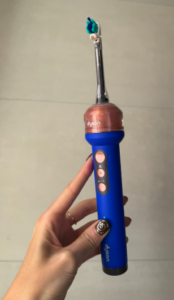
Ninety percent of us admit we don’t floss as often as we should, according to Dyson, the vacuum maker. So it came out with “CameraJet,” a $499 high-tech toothbrush.
The CameraJet uses a tiny camera to spot the flossable areas. Dyson says its precision-flossing helps prevent plaque from building up.
Here’s how it works. In the handle, there’s a 100,000-pixel macro lens camera that analyzes 28 images a second. An AI algorithm in the app identifies the gaps between your teeth before triggering the pump.
I thought this meant a mighty blast, but the toothbrush handle holds less than a tablespoon of mouthrinse (12.5 milliliters) in its tank. A precision burst fires about 0.15 milliliters, or five thousandths of an ounce. Incredibly, because the force is great, you will still feel a pop of pressure as it cleans between your teeth.
A PC Magazine reviewer said he thought it was a gimmick until he saw it in action. Now he’s going to get one. Unfortunately, it went out of stock at Dyson.com just five days after it was unveiled at IFA Berlin, one of the world’s largest technology shows.
 Internut
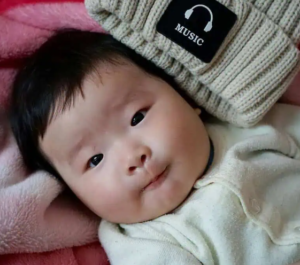
Search on the phrase “Scientists Played Bach to Sleeping Newborns and Discovered They Can Track Rhythm Just 48 Hours After Birth” to uncover an amazing story published in PLOS Biology. Just two days after being born, the babies’ brains could already predict surprisingly complex rhythms, but not melodies.