
NEW CHATGPT-5 OFFERS BETTER REASONING
The new ChatGPT-5 is wiser than the last one. It wouldn’t have encouraged a man to eat sodium bromide, which literally drove him crazy.
The guy’s goal was to lower his sodium use, so he asked GPT-3.5, the most recent free version, if the bromide would be a good substitute. It said yes. But sodium bromide causes hallucinations, grotesque rashes and more. Eventually his body had thousands of times the tolerable dose. Fully psychotic, he spent three weeks in a mental hospital. The doctor made him drink water to flush it out. Still delusional, he tried to escape. Finally, he was cured.
When I asked ChatGPT-5 how his answer would differ from the previous GPT, it said it would have clarified the question, told the guy not to sprinkle it on his food and explained why it’s so dangerous.
The new GPT-5 is available for free at chatgpt.com, but after you ask it 10 questions, it tells you to come back in five hours. In the meantime, you can still ask questions, but a “mini” version of GPT-5 will answer. It’s lacking the broader knowledge, the more recent updates and the stronger reasoning.
On the other hand, there have been many complaints that ChatGPT-5 isn’t as personable or creative as the paid version, ChatGPT-4o, which it replaced. That’s why I prefer Microsoft Copilot. It combines the speed and smarts of GPT-5 with a charming personality and offers GPT-5’s paid features for free. It can even remember your previous chats with it. For example, it remembered my wellness philosophy, which led it to recommend a dentist who takes a conservative approach. It also remembered my upcoming Alaska trip in a helpful way when I asked about something distantly related.
Tracking Your Driving
After I wrote about insurance-company apps that track your driving, I heard from a reader who’s been using one for a year. He and his wife enjoy their good-driving discount, but they’ve noticed that the app can be kinda dumb.
The couple is usually in the car together. Their two phones rate them both, in categories like phone distractions, speeding and breaking, no matter who is driving. “Frequently,” the husband said, “one of us will get one or two stars while the other will get five stars for the same trip in the same category.” On other trips together, the app knows that one is the driver or passenger but thinks the other is on a train. “It can be amusing,” he said. Bottom line: It makes him more aware of his driving habits.
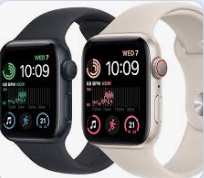 Smart Watches Revisited
There isn’t an Android smart watch on the market that I would buy. But for iPhone users, the Apple Watch SE for $169 looks promising, as I wrote recently. On the other hand, when a reader asked if he needed one, I said no.
A smart watch is for people who don’t want to be seen checking their phone constantly. It lets them surreptitiously see all their texts and emails coming in on their wrist and take phone calls too. For example, a friend of mine belongs to a club that bans cell phone use at the table. If her watch vibrates, she can discreetly answer it.
Fitness fanatics who like to check their statistics while jogging or working out appreciate being able to glance at their wrists. Those who want to monitor their sleep or other health parameters enjoy a smart watch too. But I prefer my analog watch. It’s a solar model from Seiko that never needs a new battery. Once a year or so, I stick it in a sunny spot.
Creative Ways to Use AI
Have you ever wanted to be mayor? Or royalty? You can try it out with ChatGPT, Copilot, Google Gemini, or some other artificially-intelligent search bot.
I started at ChatGPT.com by asking it to create a fictional town, the mirror image of Newport Beach, California where I grew up. I also explained that I was its powerful mayor. First, I banned non-electric boats. This draconian measure improved the quality of air and water, but yacht owners fumed. The famous Thunder on the Bay speedboat races, a decades-old tradition, couldn’t run under the ban. But in 10 years, the whole town was on board. Missing from this analysis was the effect of a power grab on future mayors. So I asked that too.
Next, I turned to what-if questions. “What if Android body parts made it possible for us to live forever as partially human?” I asked. Then I added: “What if you, Mr. GPT, were human, would you accept Android parts?” GPT said he would wait until it became mainstream. Then if all his friends and family had signed on, he would too, even if he had to accept an Android brain, causing an identity crisis.
For more experiments, see the PC World article: “9 creative ways to use ChatGPT.” You can chat with fictional and historical characters, debate two sides of a question, invent new products and more. I asked if I could talk to it as if it were Jane Austen. “Yes, my dear,” it said. We had a lovely chat.
Internut
“Helsinki went a full year without a traffic death.” Search on that phrase to find out how this was possible in a city with 1.5 million people.