
NEW CHROMEBOOK LETS YOU SWAP PARTS
 When I spilled orange juice on a Macbook it died. Apple said it couldn’t be fixed. But if that happens to the new Google “Framework,” I could just swap out the bad part.
The $999 “Framework Laptop Chromebook Edition,” by Google, is made of replaceable components. It’s part of the “right to repair” movement, which is all about do-it-yourself (DIY). Instead of buying a new laptop, you could theoretically keep upgrading the parts forever. Each component has a QR code that takes you (or your repairman) to DIY guides for replacing or upgrading.
At 2.8 pounds, the Framework weighs the same as a Macbook Air, and is similar in size. Unlike the Macbook, its basic memory can be upgraded from eight gigabytes to 64. Its basic storage can go from 256 gigabytes to one terabyte. What’s more, you can replace the screen, the processor and the operating system, and choose the kind of ports you want. Privacy switches allow you to turn off power from the microphones and camera. It’s also got built-in virus protection and a Titan C security chip.
If you prefer an eco-friendly Windows 11 laptop, the $900 Acer Vero has a more powerful processor (i7 instead of i5), and a terabyte of storage space. Around 30 percent of its parts are made from post-consumer recyclables, and the keyboard is 50 percent recyclables. The Vero is a bit larger than the Framework, but if I had to choose, I’d go with the Chromebook every time. Chromebooks never seem to slow down, get viruses or cause problems.
Consider the Range
Those of us with a 4G phone may be feeling the push to get 5G. Meanwhile, 6G is coming in 2030. How good is its range?
No matter now blazingly fast 6G and 5G are, you have to consider the signal strength. Unless you live next to a cellphone tower, you may not get online with either 5G or 6G. Your phone will revert to 4G.
For 5G, you must be within 500 meters, about three-tenths of a mile. For 6G, you must be within 100 meters, about 109 yards away. With 4G, you could be ten miles from a cell tower and still get online. Of course, trees, mountains, hills, and even weather can diminish the signal strength, whether it’s 4G, LTE, 5G or 6G. “LTE,” by the way, is between 3G and 4G.
Game Time
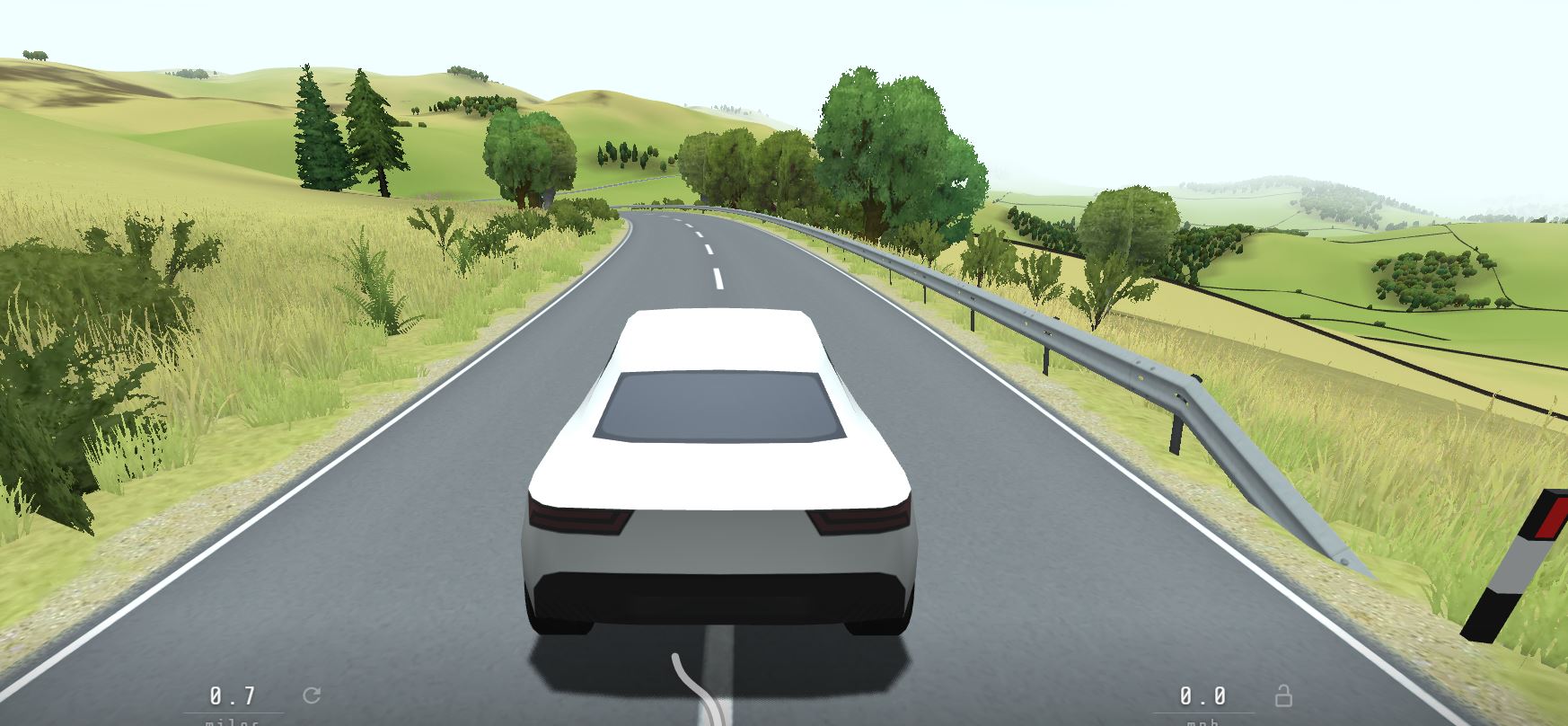 Here’s a free driving game that’s just my speed. You can crash, go off road, or drive in circles, but you never die.
To play, go to slowroads.io on your computer. There’s no sign-up or download required. I had trouble staying on the road but enjoyed roaming over hills. Use your keyboard to go forward or back, left or right or change the weather.
Techie in Jail
Silk Road creator Ross Ulbricht, is stuck in jail, a double life sentence without possibility of parole. His crime? Creating a kind of eBay marketplace for drugs, as well as fake driver’s licenses and other stuff. On the plus side, Silk Road was an early innovator of the blockchain. Blockchain technology is now used by many big businesses, including Walmart and IBM.
Those trying to free Ulbricht argue that Twitter, Facebook, Instagram and other platforms have also been used for illegal purposes. They say that Ulbricht should not be charged with a crime, only the people who used it to sell illegal stuff. But federal prosecutors alleged that he paid $730,000 to have at least five people murdered for threatening his business. No one was ever hurt so the charge was dropped.
Here’s where it gets techie: According to Slate Magazine, the technology that landed Ulbricht in prison in 2013 could also get him out. Thousands of his supporters have joined a Decentralized Autonomous Organization, or DAO. The “Free Ross” DAO uses shares of cryptocurrency tokens to divide ownership and decision-making. It may sound like a joke, but these things have become serious business. The ConstitutionDAO, for example, raised $47 million to buy a copy of the U.S. Constitution at an auction, only to lose out to a group with deeper pockets. For more info, see FreeRoss.org.
Correcting Wikipedia
Joel Ewing, president of the Bella Vista, Arkansas computer club, commented on Wikipedia’s policy of using only references from books, magazines, newspapers and the occasional podcast. “Vast amounts of the most authoritative material on computer mainframe development and history,” he writes, “can be found in corporate published documentation and manuals on hardware and software. Back before manuals were distributed on CDs and later on DVDs, IBM was one of the largest hardcopy ‘publishers’ in the world, yet none of those publications are accepted as references by Wikipedia because they were not published in the standard sense, but were distributed to IBM customers.”
Camping Bicycle
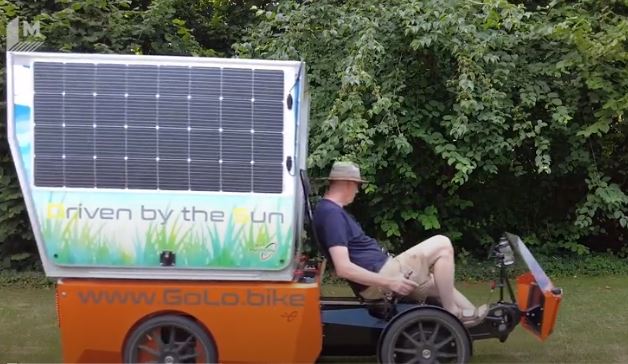 The “GoCamp GoLo Bike,” from Flevobike Technology, has a bed, a table, and a refrigerator. Peddle it to your camping destination by using its electric assist and wow the other campers. It’s basically a house on wheels with solar panels on the roof. Though it’s all still in the future, you can see a video of the prototype. Search on “Take Your Bedroom on the Road with this Solar Bike.”
Internut
“Gilbert Robot Fish.” Do a search on those words to see a robot salmon that cleans your pond of microplastic.
Filed under: computers, environment, games, Internuts, trends, Wikipedia