
FROM BIG AI TO INVISIBLE AI
Big data centers use a huge amount of electricity. But that’s changing. Someday soon, we won’t have to pay higher electricity prices because AI is hogging our power.
AI’s new Large Language Models are saving energy, because processing happens locally on our devices rather than via power-hungry remote servers.
For example, PrismML, founded by Caltech scientists, shrinks AI. Instead of giant data centers, their AI models can work on devices as small as the iPhone 17. What’s more, they take up only 1.5 gigabytes and can be downloaded for free at PrismML.com.
But PrismML’s “Bonsai” is not for casual users. It’s for tech enthusiasts who want to tinker with their own private AI, as well as developers, researchers and hardware manufacturers, especially those in robotics, wearables and smart appliances.
Take robots, for example. A robot in a warehouse or a drone in a forest can’t afford a two-second delay while it asks a data center in Virginia how to avoid an obstacle. But PrismML’s Bonsai doesn’t just offer speed. Robots with their own AI brain, because they’re offline, keep chugging even when WiFi fails. The traditional kind halts immediately, possibly toppling over.
In the appliance industry, companies like Haier and Hisense would like to add AI agents to every dishwasher and fridge, but they can’t afford the electricity bill or the server space to run them in the cloud. PrismML’s models solve that problem.
What about smartwatches, AI glasses, rings and other wearables? With intense AI use, a smartwatch can get hot and die by lunchtime. With PrismML on board, it can stay cool through a long holiday weekend.
What’s more, by having an AI brain built into a device, the ongoing cost per user drops to near zero, even as its speed and efficiency improve. Instead of coming from a big data center, the electricity and computing power comes from the user’s own gadget.
Google uses “Gemini Nano,” a similar kind of built-in AI, for simple tasks like summarizing a sentence or suggesting a smart reply. For trillions of more complex AI queries, however, it’s moving toward small modular reactors and geothermal energy instead of big data centers. This means unplugging from residential power grids, saving Google a bundle in electricity costs.
Online Dating
One of my friends found true love on Stitch.net. Another found her husband on Elite Singles.
But a new site called “MyTruDate” is getting kudos for its ability to prevent “catfishing.” That’s when someone uses a false photo to masquerade as someone else. To combat that, every MyTruDate user must undergo a criminal background check before they get access to the app. Besides showing a US government-issued ID, they must take a live selfie. They must also use their real name. The service is free for now, but later on they’ll charge a $10 screening fee and $30 for a monthly membership.
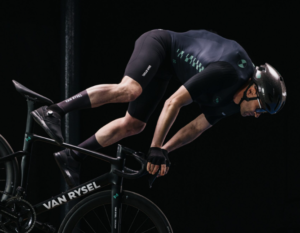 Airbags for Bikes
Professional bicyclists have suffered around 1300 fractures in the last six years. So Van Rysel is developing a special bodysuit with an inflatable airbag inside. A consumer version is expected in 2028. In the meantime, check out the Hit-Air inflatable vest for motorcyclists, $625 at Amazon.
Anxious or Not?
A book called “The Anxious Generation,” by Jonathan Haidt, claims that social media and helicopter parenting are ruining our youth. But what do our youth have to say about this?
The majority of teens think social media is good for their mental health and friendships, or are at least neutral, according to an MIT/Oxford/Carnegie Mellon study quoted by Engadget. But many do admit that TikTok, Instagram and Snapchat are bad for their sleep and productivity. Their parents, on the other hand, feel that social media is good or neutral for building friendships, but generally harmful otherwise.
Middle Mouse Button
The middle button on your computer mouse has far more functions than I ever realized. I learned about it from PC World.
For example, you can push the middle button to click a link and have it open in a new tab. Or, if you middle-click a folder in your bookmarks bar, you launch every site in the folder. On the other hand, since my bookmarks are all in one folder, when I middle-clicked it, it said: “Are you sure you want to open 154 sites?” You can also middle-click any tab to close it. Most importantly to me, you can middle-click an empty space in the tab bar to reopen the last tab you closed.
Safer Browsing
To avoid opening an insecure website, click the three-dot menu in Google Chrome. Then choose “Settings,” “Privacy & Security,” and finally, “Security.” Under “Secure Connections,” choose “Always use secure connections.” In Microsoft Edge, go to “Settings,” then “Privacy,” then “Search and Services,” and choose security.
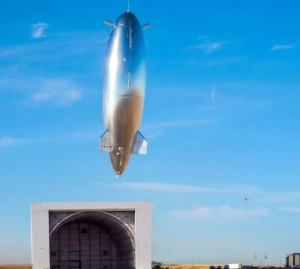 Internut
Blimps may have lost out as passenger vehicles, but they’re seeing new life as floating internet infrastructure. Search on “New Floating Internet Infrastructure” to see a video of solar-powered unmanned airships operating about 65,000 feet above sea level. They’re designed to bridge the gap between ground-based cell towers and orbiting satellites, according to ZDNET. Besides providing internet, they can monitor climate change, forest fires and other natural disasters. Towers on the ground can only reach so far. Satellites cover vast areas, but they suffer from delays.
Filed under: AI, health, how-to, Internuts, robots, security, social networks, Sports