
AI FOR FREE
When my niece recently applied for a PhD in physical therapy, she needed ChatGPT’s help to consolidate a list of 20 varied work experiences. That’s when she ran up against a paywall.
It may seem like the instant you start uploading documents, creating images or analyzing data, the paywall appears. But ChatGPT now offers unlimited texts and chats if you keep it casual. If it does ask you to pay, just switch to another AI service, such as Google Gemini, Google AI Mode or Microsoft Copilot.
What about Claude? If your queries are complex, Claude AI may ask you to come back in five hours. For example, when I wanted to translate a professor’s memoir into Korean, I’d barely started working when it asked me to come back later. “What should I do now?” I asked Claude. (In general, if I have a question about AI, I ask AI.) It introduced me to “TypingMind,” which helped get the book translated for less than I would have paid.
It wasn’t the best translation. In a side-by-side comparison with the English text, I discovered that Claude skipped whole paragraphs sometimes. So I asked GPT (or “Chatty,” as a friend calls her), if it would rather start from scratch. No, Chatty said, it appreciated Claude’s translation. But it made improvements to the Korean style and grammar and filled in the omissions. I paid $20 for one month’s usage, then canceled.
Google Gemini’s capacity refreshes every five hours until you reach a weekly limit, but I’ve never reached that, despite what seems like lots of queries. Like Anthropic’s Claude and Microsoft Copilot, it has given me great personal advice, answers to compelling questions, travel advice and directions. For example, Gemini talked me through the gigantic O’Hare airport when I was coming off a flight one night. I had to meet my stepson in a distant terminal and he hadn’t told me what gate he’d be at, but Gemini figured it all out. I used the microphone in the Gemini phone app to ask my questions so I could hear the answers without having to look down at my phone.
I like Copilot mainly for shopping advice and recipes, though it can answer tough questions too. Copilot uses the same OpenAI models that power ChatGPT, but Microsoft adds its own personality, safety features and Bing web search.
 Fitness Fiasco
My new Hume Health fitness tracker seemed great at first. But now I don’t trust it.
I found out that the previous version, the Hume 1.0, was virtually identical to a $23 Chinese knockoff, despite costing $333 more, according to Dr. Rob ter Horst, a postdoctoral scientist with over 409,000 subscribers on YouTube. In ter Horst’s comparison, the Hume’s tiny logo was the only thing missing on the cheapie version. The Hume app even recognized the clone as a genuine Hume band when connected via Bluetooth.
According to ter Horst, the original website used a testimonial from a fictitious author whose stock image appears in back pain and real estate ads. Though it’s no longer on the site, its prior existence makes me suspicious.
Moving on to the latest version, the $249 Hume 2.0, ter Horst says it’s the worst wearable he ever tested, and he’s tested a lot. For example, ter Horst’s blood pressure readings were too uniform to be believable. So were mine. I also noticed that my sleep score didn’t budge, even after a rocky night. Ter Horst used a top-of-the-line electroencephalograph for comparison purposes and found appalling differences. But even if you only care about fitness tracking, the Hume 2.0 disappoints. It currently tracks only running, walking and weightlifting and doesn’t do a good job of any, ter Horst says.
Alternatively, he suggests getting an Amazfit Helio Strap or a Fitbit Air for around $100, less than half the price of the Hume. In a chart ranking dozens of wearables, the Pixel Watch 5, Apple Watch Ultra 3, Oura Ring 5, and Whoop are in the top tier.
 Obsessed with Health Wearables
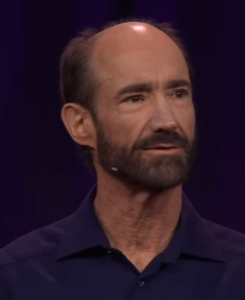
“Why I’m obsessed with health wearables (and you should be too)” is a 13-minute talk at Ted.com from genome researcher Michael Snyder.
With a smartwatch and pulse oximeter, Dr. Snyder discovered he had Lyme disease when his blood oxygen dropped precipitously while his pulse rate went up. This info led to early treatment, avoiding complications.
Consequently, Snyder’s team at Stanford developed a smartwatch-based warning system that looks for changes in an individual’s normal resting heart rate. During COVID, the system generated advance alerts for 80% of infected participants, typically three days before symptoms appeared.
Snyder wears eight wearables, including four watches, two rings and a couple of hearing aids, though he looks young. I recently misplaced my Apple Watch and am presently enjoying an unwatched existence.
 Robot News
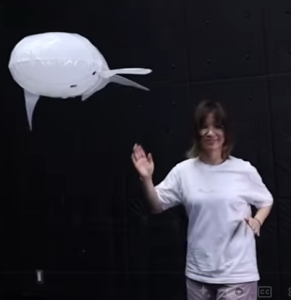
–Soft flying robots are the latest thing in robotics. Like a flying pillow, they’re much less likely to hurt humans than the metallic kind. They’re also much quieter, create less disturbance in the air, and float upstairs easily. The whale version might be your next dance partner, buddy or floating alarm clock to nudge you awake.
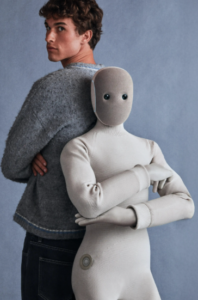
–Robots are starting to wear cozy-looking bodysuits to blend in with the family. The Neo, from startup 1X, will acquire skills over time, besides looking nice. It’s expected to ship later this year.